Education

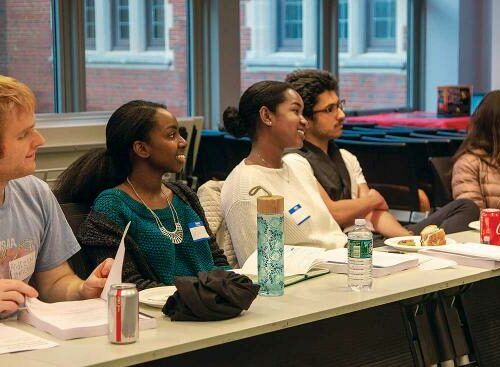
Education is the biggest driver of social mobility in modern societies, especially as the returns to higher education have increased sharply since the 1970s, coincident with a widening in income inequality, increased market deregulation and augmented international capital mobility. (The former, it is argued by some, is a consequence of …

Immigration

Multiculturalism and integration: Political borders are increasingly becoming irrelevant through globalisation and mass migration. This has led to many benefits as well as challenges to our society. Some countries are struggling to integrate immigrants into the mainstream society and this has sparked an intense debate throughout western democracies, which have …

Income inequality

The economics and politics of income distribution: How society divides its wealth amongst its members is at the core of economics (and politics).  It is generally taken for granted that more equal distributions are, ceteris paribus, more desirable for society.  (This is also a natural corollary given dimishing marginal utility …

Monetary policy

Quantitative easing, zero-interest rate policy (ZIRP) and liquidity traps: During the era of the so-called Great Moderation (circa 1985-2007), monetary policy had become almost mundane.  Countries began embracing inflation targeting (whether explicit or implicit) and in the United States the Taylor Rule, an approximation of the Federal Reserve’s policy of setting …

Home » Currently Reading:

Kai L. Chan

Welcome / Bienvenue / 歡迎 / Willkommen / Приветствие:

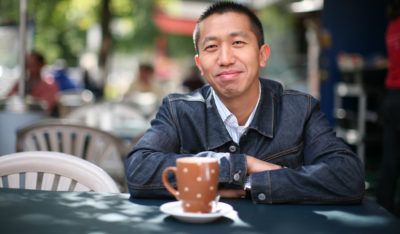
Thank you for visiting my site.  I am an economics/finance/policy professional currently based in Dubai, United Arab Emirates.  I grew up in Toronto, Canada and was educated at the University of Toronto (BSc) and Princeton University (MA, PhD).  Before moving to Dubai, I worked in New York City (finance) and Singapore (consulting).  Although my background may sound prima facie like that of many Ivy League graduates, until recently my life experiences were solidly humble and spartan.

Business Report for the University of Toronto.  Photo courtesy of Dave Chan (www.davechan.ca).

About me and this site:

I was literally born on the streets of rural Guangdong province to peasant parents in communist China.  My family moved to Canada when I was four years old with little more than the clothes on our back and an electric rice cooker.  I spent the next 20 years in Toronto, which were formidable as my family was poor and we had little cultural/human capital to guide us in our new country.  Before my eighteenth birthday I was arrested twice and had dropped out of high school.  Nevertheless, I eventually gained admission into one of Canada’s elite universities (University of Toronto (Trinity College)) and then went on to receive a PhD in economics from Princeton University, where my supervisor was (future Nobel laureate) Paul Krugman.

My path from poverty to a Princeton PhD is an almost unreal story about luck, talent and unusual circumstances.  ((1).  I graduated from a high school where earlier in my teenage years I was told by the vice principal responsible for my file upon trying to re-enrol: “The day you get back inside this school is the day I quit!”…  He was on sick leave the year I returned.  (2).  I spent $30 on a used copy of a GRE study guide and devoted one week’s time to prepare for my graduate admission test.)  At the nadir of my life (young adult) I ate rotten vegetables tossed away by local food wholesalers and chicken bones that I collected from a fried chicken shop.  I am now an economics/finance/policy professional having lived and worked in East Asia, Europe, the Middle East and North America, and enjoy a comfortable lifestyle where I mingle with the Ivy League crowd.  My life has thus been one of contrasts, breaking stereotypes about education, ethnicity/race and socioeconomic status.  (See:  ”From poverty to Princeton PhD.“)

My values and perspective on life have been profoundly shaped by my experiences; my background allows me to view the world through a unique lens that enables me to inject fresh insights into the complex debates about the economy, education, immigration and politics.  I hope to thus be a catalyst for frank discussions about matters important to our society.

This site is a repository of all the formal writings and media from me, as well as a place for me to provide brief notes on some topics dear to me for which I wish to share my thoughts and educate the public.

Contact me:

I would love to hear from you if you have thoughts, opinions, critiques or general feedback on any of the content on this website.

To send me an e-mail:

Kai L. Chan
Dubai,  2013

Bookmark and Share

Categories:

Archives:

Recent:

Student life

Letter to the Economist (December 15, 2012) SIR – Although online courses in higher education are a mostly positive development, real learning in universities does not come just from course content (“Not what it used to be”, December 1st). Interaction on academic and non-academic topics with fellow students matters in …

Income inequality is still a major problem

Letter to the National Post (November 23, 2012) This article on the Fraser Institute’s take on income mobility confuses personal income growth with (inter-generational) income mobility. Over a course of a lifetime income rises as people get promoted, etc., and typically peaks in the 40s and 50s. So there’s no …

Banks, race, gender

Letter to the Globe & Mail (November 8, 2012) Re Women Challenge Central Banking Men’s Club (Nov. 7): The board of the Bank of Canada is not much different than the euro zone experience. Only two of the 15 board members are women. The board fares even worse on reflecting …

Asian Immigrant Experience Defies Easy Comparisons

Letter to the Wall Street Journal (November 2, 2012) Although Asian-Americans as a whole have achieved a lot of success (as measured by household income and education), they still lag on many indicators, most notably social inclusion, where they still seem relegated to the lower echelons of social hierarchy. Several …

A racial slur against the Chinese

Letter to the Financial Times (May 19, 2012) Mr Kai L. Chan. Sir, I was shocked to have seen the word “Chinaman” used in print. Are your editors ignorant of the fact that the word is a racial slur? One does not call a person from London an “Englandman” and …

Real, it isn’t

Letter to the Globe & Mail (April 27, 2012) I find it amusing that all five cast members of The Real Housewives of Vancouver are white and blond (Why Our Clickers Are Stuck On Shallow – Arts, April 25). Almost half the population of Vancouver is visible minorities and far from every …

Contrast to Seoul’s defining moment

Letter to the Financial Times (October 25, 2011) From Mr Kai L. Chan. Sir, Watching the Greek tragedy unfold — most recently with protests in Athens that turned violent (“Athens burns: Austerity measures passed despite protests”, report, October 20) — one cannot help but juxtapose these actions with those that …

Economic remedies

Letter to the Princeton Alumni Weekly (April 6, 2011 edition) It was such a delight to read about Alan Blinder ’67 (feature, March 2).  I was fortunate enough to have met Blinder when I was at Princeton.  (Blinder was on my dissertation committee, as was Paul Krugman.)  In addition to …

Hear! Hear! to Higher Education

Letter to Trinity Alumni Magazine Winter 2011 It was nice to read about the new deans, Jonathan Steels and Kristen Moore, as well as about Brett Cumberbatch, who is working on outreach to at-risk youth in Toronto’s northwest.  The efforts of people like them help enrich Trinity, and our communities. …

Tiger Mother’s Child-Rearing Method Draws Response

Letter to the Wall Street Journal (January 14, 2011) Although the way Ms. Chua raised her children may be typical of many high-achieving Chinese families, there are many Chinese families who live quite the opposite life.  According to recent Census data, the majority of Chinese people grow up in low-income …

Tiger moms

Letter to the Globe & Mail (January 12, 2011) Amy Chua’s book highlights one segment of Chinese parenting in the West to the detriment of another swath of the community.  According to recent census data, the majority of Chinese-Canadians grow up in low-income households, and within this group children typically …

Letter to U of T Magazine (re: Less Starin’, More Sharin’)

U of T Magazine, Autumn 2010 I read Andrew Murphy’s column and recalled the days when I was an undergraduate at U of T.  Looking back, I wish I made more lasting connections when I had the chance.  Somebody once told me (after I graduated) that the most important thing …